
Seal 9
ZEN · Peace
Let the practice come to rest.
How to let an exercise end
In the first eight seals you gave your attention something to do. You formed gestures, repeated sounds and built images. In ZEN you bring those activities to a close. There is a moment after the last sound when you can hear the room again. Give that moment your attention without immediately filling it with another instruction.
The word for contemplation here is “Perfection.” You can understand it through completion. A breath comes to its end. For that instant there is nothing you have to add to make it a completed breath. You may still have unfinished work and feelings to attend to later. You can let this particular act be complete.
Release the image
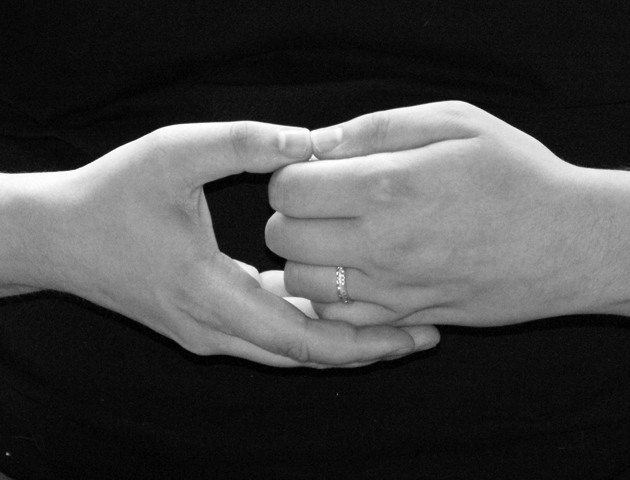
Open your right hand, palm up. Curl the fingers of your left hand loosely and rest their knuckles on the fingers of your right hand. Bring the thumb tips together lightly. Settle your hands in your lap. Notice that they can keep the gesture with very little effort.
Give your attention to the whole upper part of the head. In the language of Qi-Gong and Kuji-In, this is the crown. Recall the white field from ZAI. Then stop renewing it. An image held in mind tends to change or fade when you give it nothing more to do. Let that happen. Even the wish to see whether it has faded can be allowed to pass.
The second book closes with a meditation on “no mind.” A mind that has been busy learning needs time to settle. Trying to push out each thought gives you a fresh task every time a thought arises. When you notice a thought, let it be there. You do not have to supply its next sentence. Keep breathing and see what happens when you leave it alone.
The Sanskrit mantra
Om arapacana dhi
Recite the line softly. Listen all the way through the final syllable. Let your mouth relax and stay with the silence that follows. Sound in the room can be part of that rest. If you start another repetition automatically, finish it gently and pause again. You are learning that you can give attention freely and also let it rest.
Return to ordinary activity
Open your hands. Notice the support beneath your feet and seat. Look around the room before you stand. If something needs to be done, choose the first action and give it your attention. One everyday sign of this practice is being able to stop rehearsing a finished task long enough to be present for the next one. That is a modest, quite usable experience of peace.